

Let this be your one-stop shop for all things data and AI. Our team at dbSeer is tracking trends, watching the market, and exploring what’s actually changing in how organizations build with data — so you don’t have to do it alone.
If you’re not already subscribed on LinkedIn, sign up to have the Data Dispatch delivered to your inbox each quarter.
What We’re Watching: Everyone’s Building an AI-Native Business
Software engineers are going to be more in demand than ever: specifically, to help organizations cross the gap from prototype to production ready. But what if crossing that gap requires more than a great engineer?
It sounds contradictory: 52,000 tech layoffs in Q1 2026, with nearly half attributed to AI restructuring- and yet, in the same window, software engineer job listings jumped 30% to more than 67,000 openings. This is a signal worth paying attention to because it complicates the picture currently overwhelming today’s headlines.
The companies hiring now are building. And critically, many of them are not tech companies at all. Healthcare. Retail. Manufacturing. Finance. Construction. These industries run on data but were never built as data organizations. They didn’t architect systems with integration in mind. And now — with AI tools more accessible than ever — they’re deploying intelligence, experimenting with vibe coding, pushing to level up their businesses in ways that weren’t possible two years ago. The catch: most are built with a prototype mindset, not a production one. And that gap is exactly where things break. Enter: software engineers.
At dbSeer, we’re very encouraged by this. Hiring engineers and building the internal capability to move from prototype to production is exactly the right instinct. Yet, the constraint isn’t who’s doing the building. It’s what they’re building on.

A software engineer can build you a model. Yet, alone, they cannot fix your upstream data. They can write a pipeline — but they can’t reconcile three years of inconsistent definitions living across four systems. They can deploy an agent. But if the data that agent reasons over is fragmented, siloed, or simply wrong: the agent produces confident, articulate nonsense.
This is a watershed moment in the business world. And the organizations getting it right aren’t necessarily waiting until everything is perfect before touching AI: they’re moving deliberately, addressing what matters while the build is already in motion.
That’s the work dbSeer does. We’re data and AI engineers who’ve spent years building the pipelines, architectures, and governance layers that make intelligent systems hold up in production. We understand how data moves through an organization: where it breaks, where definitions drift, where the gaps between systems quietly create errors that compound over time. That pattern recognition means we can identify exactly what needs to be right for your specific AI use case to work and fix it while the build is already in motion. One team that doesn’t separate the data work from the AI work. You don’t need a data firm and an AI firm. You need a team that does both at once.
dbSeer’s role in this environment isn’t just to be the team that helps you build. It’s to be the team that makes everything else buildable: ensuring your data is accurate where it needs to be, your AI is trustworthy from the start, and your organization doesn’t need three different partners to get there.
What We’re Building: The Four Questions We Ask
The first conversation with any new client isn’t about which of our service areas they need. It’s about figuring out which one is actually blocking them. Those are different questions, and they almost always have different answers.
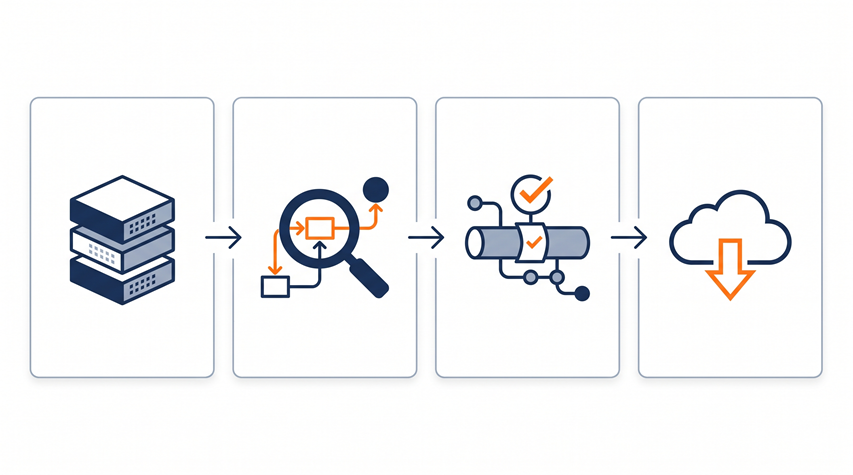
dbSeer works across four interconnected service areas. But the first thing we do with any new client isn’t propose all four: it’s asking four diagnostic questions.
Is your data architecture ready to support what you’re trying to build?
Most AI and analytics initiatives fail here: not because the technology isn’t capable, but because the data it runs on isn’t unified, governed, or trustworthy enough to produce reliable results. This is what dbSeer means by foundation-first: doing the structural work today that makes everything downstream possible. Warehouses, lakehouses, migrations, integrations (NetSuite, Deltek, and others). The infrastructure that everything else runs on.
Where can AI actually move the needle in your workflows?
There’s no shortage of AI enthusiasm. There is a shortage of organizations that know which use case to pursue first that will give them a high return on their investments.
The dbSeer AI Accelerator exists for exactly this: a structured 6-week path — Discover & Validate, then Build — with a go/no-go gate between phases and AWS POC funding available for qualifying engagements.
Not sure where to start? That’s what the discovery session is for.
Can you trust the numbers in your reports?
Platforms don’t maintain themselves: data quality degrades and definitions drift. DataOps is the operational discipline that keeps pipelines trustworthy after the platform is live: proactively catching issues before they reach the dashboards executives are making decisions from. The numbers the business runs on should actually be accurate.
Are you paying for what you’re actually using?
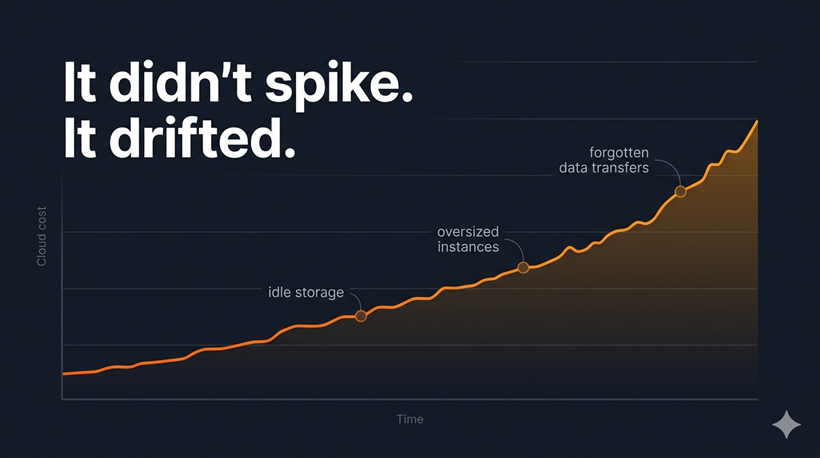
Cloud and data service bills have a way of quietly growing. FinOps right-sizes AWS and data platform spend, identifies what you can stop paying for, and puts guardrails in place before the bill becomes its own problem worth solving.
Some clients come to dbSeer needing one of these. And some work through all four over time — but the path is rarely linear, and the starting point is almost never where they expected.
What we offer isn’t a package. It’s a diagnostic conversation, and then the work that actually matters for your business to flourish.
What We’re Working On: AI Assistants Amplifying Your Business
Everyone is talking about the potential of AI Assistants. The conversation usually splits in two directions: breathless optimism about what AI will eventually replace, or cautionary anxiety about what it already has.
What’s missing from most of that conversation is what it looks like when an AI Assistant works in a real organization, on real data, for real users who were skeptical before they saw the results.
That’s what we’ve been building.

One of dbSeer’s recent engagements involved a national franchise network managing pricing intelligence across hundreds of locations. Twice a year, analysts undertake a comprehensive review: synthesizing years of internal data with external competitive pricing, occupancy trends, and regional market conditions. The result is high-value strategic guidance. The process has been a bottleneck.
Pricing questions flow through a single chokepoint: the analyst. Someone with a time-sensitive question submits it, waits and gets an answer shaped by whoever has bandwidth that week.
dbSeer has built an agentic AI system that changes that dynamic, without removing the analyst and their expertise from the equation. The institutional expertise becomes the architecture, amplifying the analyst’s work.
The result: an AI that answers pricing questions on demand, in natural language, with the contextual reasoning of the analysts who helped build it. Users can ask “which markets are significantly over- or underpriced?” and receive a response that identifies specific locations, quantifies the pricing gap, and surfaces the most relevant cases for review. The analyst is no longer bogged down with last-minute requests. They’re freed up for the deeper strategic work that keeps a system like this sharp: because the AI was built on their expertise, and the more they can think at that level, the more valuable that expertise becomes.
Built on Amazon Bedrock using Claude Sonnet and a custom multi-agent framework, the system advanced from proof of concept to live pilot in six weeks.
This is the version of AI Assistant that delivers: not a chatbot bolted onto a database, but a purpose-built system trained on the logic of your most knowledgeable people, running on your real data, in your environment. That is the difference between a knowledgeable AI and a useful one.
Most organizations have expertise sitting in someone’s head right now. The question worth asking is whether AI can carry the expertise (and the business) further — and whether you have a partner who knows how to build that.
Team Spotlight: Welcome, Chuck
dbSeer is excited to welcome Chuck Parrish as Senior Advisor, Operations & Delivery, to the team! We asked him a few questions for the latest edition of our Data Dispatch.

After more than 35 years working with technology companies and enterprise customers across telecommunications, SaaS, cloud, and data platforms, I’m excited to be joining dbSeer as Senior Advisor, Operations & Delivery. Throughout my career, I’ve helped organizations improve operations, navigate complex transformations, and turn technology investments into meaningful business outcomes. What has always motivated me most is bringing together the right people, processes, and technology to solve difficult challenges and create measurable value for customers and the businesses they serve.
What drew me to dbSeer goes beyond the company’s technical expertise. I’ve known and worked with members of the dbSeer team for years, and I’ve consistently been impressed by their technical capability, professional credibility, and commitment to doing right by their clients. Just as importantly, I’ve come to know the founders and partners as people of integrity who do what they say they’ll do. In an industry where trust is earned over time, that’s a rare quality—and it’s the foundation for the kind of long-term client relationships and business impact that make this opportunity so exciting.
| Q1 | You’ve led large-scale data and technology transformations from the operator’s seat. What did those experiences teach you about what separates a transformation that sticks from one that stalls? |
| One thing I’ve learned over the years is that successful transformations are rarely about having the perfect plan, the perfect technology, or even the perfect execution. In large, complex initiatives, there will always be unexpected challenges, competing priorities, and difficult tradeoffs. What separates the transformations that stick from those that stall is how people work through those moments. The organizations that succeed foster frequent and transparent communication, are honest about risks and mitigation plans, and build the trust necessary for open collaboration and constructive compromise. When teams stay aligned around the business objectives—whether that’s cost reduction, speed to market, operational efficiency, or ROI—they can navigate obstacles without losing momentum. In my experience, transformation succeeds when people remain committed to the outcome, even when the path to get there needs to change. | |
| Q2 | When a business leader tells you they want to become ‘more data-driven,’ what’s the first question you ask them? |
| My first question is usually, “What’s stopping you?” When a business leader says they want to become more data-driven, they’re often telling me that they don’t have the information, visibility, or confidence they need to make timely business decisions. So rather than starting with technology, I like to understand what success would look like for them. If there were no constraints around their current data, systems, or tools, what decisions would they like to make faster, better, or with greater confidence? From there, I work backward to understand their current data landscape, applications, processes, and organizational challenges. In my experience, the goal isn’t simply to become more data-driven. The real goal is to become more decision-driven. That starts with having data you can trust, but it doesn’t end there. As AI continues to evolve, I believe the next frontier is enabling organizations to automate a significant percentage of routine decisions while maintaining the appropriate levels of oversight and governance. The leaders who create the most value won’t be the ones reviewing every dashboard and report. They’ll be the ones who trust their data and systems enough to allow technology to handle routine decisions, freeing them to focus on exceptions, emerging opportunities, strategic choices, and the business outcomes that matter most. | |
| Q3 | What’s the opportunity you’re most excited to bring to dbSeer clients as you settle into this role? |
| What excites me most is the opportunity to help our clients realize even greater value from the capabilities that dbSeer already delivers so well. dbSeer has built an outstanding reputation for technical excellence and successful project delivery. My background in customer success, professional services, and business operations has taught me that delivering the technology is only part of the journey. The real measure of success is whether that technology ultimately drives the business outcomes the customer set out to achieve. One of the opportunities I see is helping clients make a stronger connection between the solutions being implemented and the value those solutions create for their business. That means focusing not only on whether a project was delivered successfully, but also on whether it improved efficiency, accelerated growth, reduced costs, enhanced customer experiences, or achieved the strategic objectives that justified the investment in the first place. I believe the strongest client relationships are built when technology delivery and business outcomes are equally important. When customers clearly see and measure the value being created, everyone benefits—the client, dbSeer, and our partners. That’s the foundation for long-term trust, long-term growth, and the kind of strategic partnerships that create lasting impact. | |
What’s Next: On Our Radar
Data Dispatch: Signal — Coming August 2026
The Data Dispatch is going audio. We’re releasing a quarterly podcast companion to this newsletter: short, focused conversations on what’s moving in data and AI. The first episode targets August 2026. Subscribe on LinkedIn to be the first to hear it.
Ready to turn your data challenges into competitive advantages?
Schedule a consultation at dbseer.com or connect with us on LinkedIn. Let’s make data drive your success.